Niantic Campfire
- 3.2
- Rating
- 1.00M
- Installs
- Free
- Price

 Analysis by App-foxy
Niantic Campfire is a social app built around Niantic’s connected game communities, and I found its value depends heavily on whether you already spend time in one of those games. It is free, aimed at a teen audience, and developed by Niantic, Inc. Rather than trying to replace every chat app on your phone, it works best as a companion for finding nearby activity, coordinating with other players, and making a game session feel less isolated.
My first impression was that Campfire makes the most sense when I treat it as a shared meeting point rather than as a complete social network. The app can be useful before I leave home, while I am deciding where to play, and after I have joined a group that I did not know personally. That focus is also its biggest limitation: if you are not involved in a Niantic title, there is not much reason to keep it installed.
How Campfire feels in its current form
The current version is 2025.37.0, and the app has been available since June 13, 2022. Those details matter because this is not a brand-new experiment that needs to prove the basic idea from scratch. It has had time to settle into its role as a companion for Niantic players, while still feeling more specialized than familiar social platforms such as Discord, WhatsApp, or Facebook Groups.
You May Also Like

 Blood Strike: 2.5 Anniversary
Blood Strike’s Loadouts Turn Every Drop Into a Tactical Gamble
A close look at Blood Strike’s custom loadouts: how fast access to signature weapons reshapes its battle royale rhythm, rewards preparation, and narrows the gap between fights.

 Pandora - Music & Podcasts
Pandora’s Music Is Easy to Start, but Harder to Recover
Pandora’s strength is its low-effort path from a seed to a station. Its weak spot is how much confidence it asks you to place in connection, setup, and quiet recovery.

 8 Ball Pool
 Is Built on Rivalries, Rematches, and Routine
A close look at the rivalries, rematches, shared routines, and unanswered safety questions that turn a quick pool match into a persistent mobile community.

 Samsung Music
’s Quiet Strength Is Playing What You Already Own
Its reach comes less from spectacle than from dependable access to a personal library. That simplicity is both the app’s strongest retention engine and its ceiling.

 AccuWeather: Weather Radar
AccuWeather Review: A Quick, Clear Forecast for Everyday Decisions
For everyday plans, the best forecast is the one you can understand quickly. AccuWeather makes rain timing, radar, and local conditions easy to act on, with a few trade-offs.

 Hill Climb Racing
Why Hill Climb Racing Still Turns Crashes Into One More Run
A tiny car, a bumpy hill and one more upgrade: Hill Climb Racing keeps resurfacing because its simple chaos makes every near-miss feel personal.
More From Our News Desk
View All News


On Android, the stated minimum operating system is Android 7.0, which makes the app accessible to people using older compatible devices. In everyday use, though, compatibility is only one part of the decision. A phone can run the app and still not be the ideal device for location-heavy gaming, messaging, and switching between Campfire and a Niantic game. Battery life, screen visibility outdoors, and a reliable connection can matter more than the operating-system requirement.
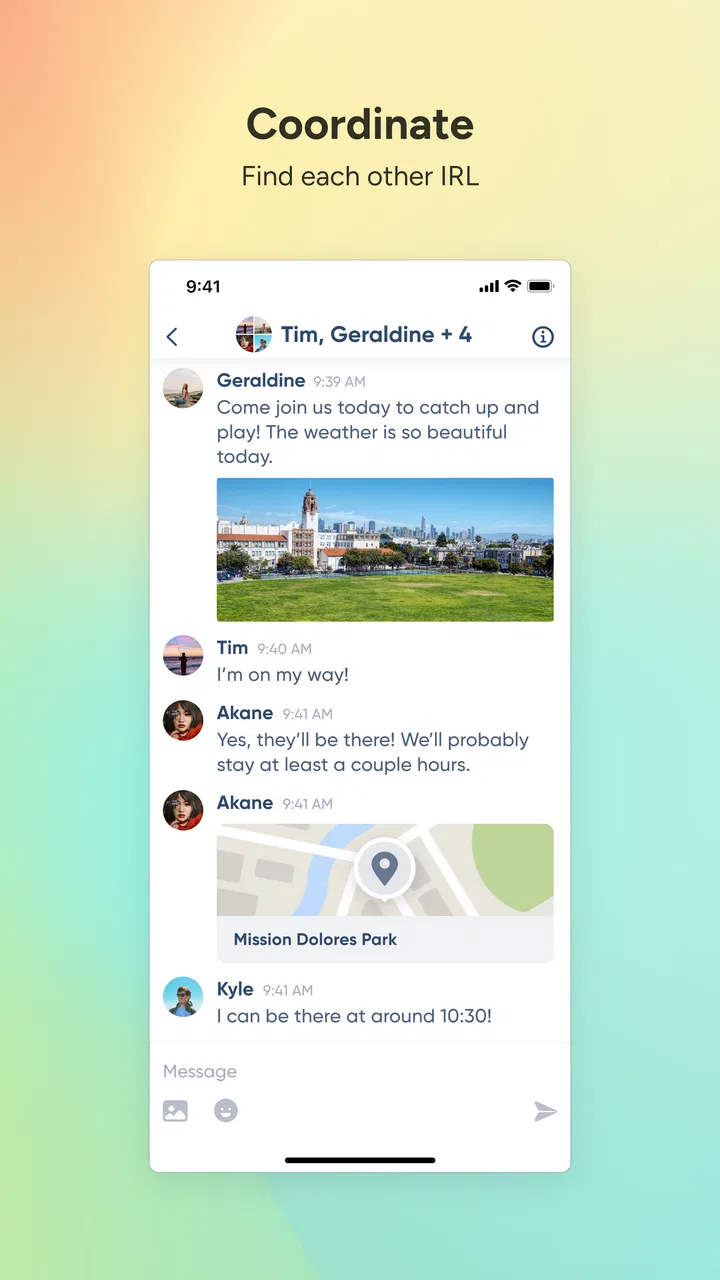
The app’s social purpose is easy to understand. I can use it to look for activity connected with nearby players, check whether other people are gathering, and communicate around a session instead of relying entirely on public posts or a separate chat room. That creates a useful bridge between the game on my screen and the people physically playing around me.
That bridge is most valuable when timing matters. If I am considering a short trip across town, a quick look at the local activity can help me decide whether the journey is worthwhile. Without that kind of context, I might arrive alone and discover that the opportunity has already passed. Campfire does not remove the uncertainty completely, but it gives the social side of a Niantic session a more visible place.
The app is free, which lowers the barrier to trying it alongside a supported Niantic game. I would still think of the real cost as attention and battery rather than money. Keeping another social app open, checking conversations, and moving between maps and gameplay can make a long session feel more demanding, especially on an older phone.
What has changed for the better
The clearest evolution is the way Campfire presents itself as infrastructure for Niantic’s wider game ecosystem rather than as a standalone chat application. That distinction helps explain why its usefulness can vary from one player to another. Someone who regularly joins local sessions gets a practical coordination layer; someone who plays privately may encounter little that changes how they play.
I also see value in having game-related conversations separated from general personal messaging. A group formed for a particular event or local activity does not need to occupy the same space as family conversations, workplace chats, or unrelated online communities. That separation can make it easier to join a temporary group without handing strangers access to the rest of my social life.
Another meaningful improvement in the product’s direction is the emphasis on discovery. Traditional chat apps are good once a group already exists, but they are not always good at helping a player find the group in the first place. Campfire’s game-centered context gives local activity a more natural home. That is a subtle difference, but it changes the starting point from “Who do I already know?” to “What is happening around the game I am playing?”
There is a trade-off here. A general platform usually has stronger moderation tools, richer media sharing, and more established community habits. Campfire’s narrower purpose means less clutter around the game, but it also means I would not choose it as my main social app. I see it as a doorway into player coordination, not a replacement for every community tool.
How existing players can use it more effectively
The most useful workflow is to check Campfire before committing to a journey. I would first look for signs of local activity, then decide whether the timing and distance make sense, and only afterward start the game session. This simple order prevents a common mistake: opening the game first, traveling on hope, and discovering that there is no one available to play with.
A second practical habit is to use Campfire for coordination but keep sensitive personal details out of public or unfamiliar conversations. A game meetup may require a general meeting point, but it rarely requires sharing a home address, workplace schedule, or other identifying information. The app makes meeting players easier; that does not mean every player should be treated as a trusted friend immediately.
I would also separate “finding people” from “staying organized.” Campfire can help me discover a local opportunity, but a small group may still prefer a dedicated chat elsewhere for detailed planning, reminders, or long-running community discussions. Moving to another service is not a failure of Campfire. It is often the sensible division of labor: use the Niantic-centered space to find the activity, then use the group’s preferred tool for deeper coordination.
For a new player, the best approach is to observe before posting heavily. I can learn how local groups communicate, whether they prefer short notices or detailed plans, and whether the activity is welcoming to newcomers. This is more useful than assuming that every visible conversation is an invitation to join. A little patience can prevent awkward messages and help me find the right level of participation.
For an established player, the app can reduce the need to repeat the same announcement across several places. A local organizer can point players toward a shared activity and use the game context to keep the conversation relevant. The benefit is greatest when the group has a clear purpose and a predictable rhythm. If the group is inactive, fragmented, or spread across too many channels, Campfire may add another place to check rather than simplifying anything.
A realistic day with the app
Imagine I have a free hour after work and want to play a Niantic title outdoors. I open Campfire while still at home, check the nearby activity, and look for a session that fits my route. If other players are already discussing a meeting, I can decide whether to join them instead of wandering alone. On the way, I can use the conversation to confirm the broad plan, while avoiding unnecessary personal information.
When I arrive, the app has already done its most important job: it helped turn an uncertain solo outing into a possible group session. I do not need it to entertain me every minute. I can switch back to the game, use Campfire when coordination is needed, and leave the conversation when the session is over. That makes the app feel lighter than a general social network, provided the local community is active.
The same scenario also shows the weakness. If the nearby activity is outdated, if nobody responds, or if the group is too far away, Campfire cannot manufacture a gathering. Its usefulness comes from network activity, not merely from installing the app. In a quiet area, the experience may feel empty even though the product itself is working as intended.
Where it compares well, and where it does not
Compared with Discord, Campfire is easier to understand for a player who wants game-related local discovery without joining a large collection of servers. Discord is usually better for persistent communities, voice communication, detailed channels, and long-term organization. I would choose Discord for a club that has regular meetings and many topics; I would choose Campfire when the immediate question is what is happening around a Niantic game.
Compared with WhatsApp or group text messages, Campfire is less dependent on already having everyone’s phone number. That can be an advantage when meeting players for the first time. On the other hand, people who already have a trusted WhatsApp group may find it faster and more familiar for direct planning. Campfire earns its place when discovery and game context matter more than convenience within an established circle.
Compared with Facebook Groups, Campfire feels more focused and less tied to a broad social identity. A Facebook group may provide announcements, history, and a larger archive of discussions, while Campfire is better suited to the immediate relationship between location, game activity, and players. The right choice depends on whether I need a local noticeboard or a live coordination tool.
That comparison leads to a clear recommendation. Campfire is a strong companion for active Niantic players who want to meet others, especially when they are new to an area or tired of searching through unrelated social channels. It is a weaker choice for someone who wants a full-featured community platform, private messaging for everyday life, or a social app independent of Niantic games.
Friction that can affect the experience
The biggest limitation is the dependence on local participation. A social discovery tool cannot be judged only by its interface because the quality of the experience changes from place to place. In one neighborhood, I might find useful activity quickly; in another, the same screen may offer little practical help. That inconsistency is not easy to solve with design alone.
There is also a mental cost to managing another channel. Players may need to check the game, Campfire, and an external group chat to understand the full plan. If organizers divide information between those spaces, newcomers can miss important context. I would encourage any group using Campfire to keep essential details in one clearly identified place rather than assuming everyone checks every channel.
Safety and privacy deserve attention as well. Meeting unknown players can be enjoyable, but I would choose public locations, tell someone where I am going, and avoid sharing more personal information than the activity requires. The teen content rating makes the app accessible to younger users, but that should not be mistaken for a guarantee that every interaction is suitable or trustworthy. Common online and in-person safety habits still apply.
Another point is that a location-based companion can encourage more screen checking than expected. I would avoid refreshing constantly while walking and would set a simple plan before leaving. The app is most helpful when it supports the outing, not when it becomes the reason I keep staring at the phone. For long sessions, I would also carry a charging option or start with enough battery for both the game and social coordination.
Who should try it now
I would recommend Campfire to players who regularly use Niantic titles and want a better way to discover nearby activity. It is particularly useful for people who have moved to a new city, play at unusual times, or want to meet local players without immediately exchanging personal contact details. Organizers may also appreciate having a game-specific place to direct potential participants.
I would be more cautious if I already have a highly active private group that handles everything efficiently. In that situation, Campfire may still help with discovery, but it may not replace the tool my friends already use. I would also skip it if I do not play Niantic games, dislike location-oriented social interaction, or want a broad entertainment network rather than a focused companion.
The audience size suggests that the idea has reached a substantial player base: Campfire has more than one million installs, with an average rating of 3.3 from around twelve thousand ratings. I read that combination as evidence of real interest alongside mixed experiences, not as a reason to assume the app will work equally well for everyone. The local community around me remains more important than the headline figures.
What I would watch as the app continues
With the current version at 2025.37.0, I would watch how Niantic continues to balance discovery with communication. The strongest future direction would be making it easier to understand which activity is current, which conversations are genuinely useful, and where a newcomer should begin, without turning the app into an overloaded social network.
I would also pay attention to how well Campfire serves both occasional participants and dedicated organizers. Casual players need quick, readable context; organizers need dependable ways to keep plans understandable. If the product favors only one group, the other may stop contributing, and the local network can become less useful for everyone.
My final view is positive but specific. Campfire is worth installing when your Niantic gaming life includes other people. It can help me decide where to play, find a temporary group, and keep game-related coordination separate from my personal messaging. It is not magic, and it is not a universal social replacement. Its success depends on active local players, sensible communication habits, and my willingness to use it as a companion rather than a destination.
For that reason, I would try it alongside the Niantic game I already play, check whether nearby activity is genuinely useful, and keep only the parts of my social routine that make outings easier. If the local network is active, Niantic Campfire can turn a solitary session into a more connected one. If the network is quiet, another established community tool may serve me better until the situation changes.
FAQs for Niantic Campfire
01What is Niantic Campfire and how does it work?
Niantic Campfire is a social app designed to enhance your experience with Niantic's games, such as Pokémon GO. It allows players to connect with friends, coordinate events, and discover new communities. Users can share locations, chat with friends, and plan meetups within the app, making it easier to collaborate and enjoy games together.
02Is Niantic Campfire available for both Android and iOS devices?
Yes, Niantic Campfire is available for both Android and iOS devices. You can download it from the Google Play Store or the Apple App Store. Ensure your device meets the minimum system requirements for optimal performance and check for any region-specific availability restrictions before downloading.
03How does Niantic Campfire enhance my gameplay experience?
Niantic Campfire enhances gameplay by providing a dedicated platform for communication and coordination. Players can join local or global communities, share tips, and organize events. Features like location sharing and group chats make it easier to plan raids or gatherings, fostering a more interactive and engaging gaming experience.
04Is it safe to share my location on Niantic Campfire?
Sharing your location on Niantic Campfire is generally safe, but it's important to use this feature responsibly. The app provides privacy controls allowing you to decide who can see your location. Always ensure you’re sharing your location with trusted friends or groups and review privacy settings regularly to maintain control over your information.
05Can I use Niantic Campfire without playing Niantic games?
While Niantic Campfire is designed to complement Niantic's games, its social features can still be enjoyed independently. Users can connect with friends, chat, and explore communities even if they're not actively playing a specific game. However, its full potential is best realized when used alongside games like Pokémon GO.
Pros
- Seamless integration with Niantic games.
- Helps discover local gaming events.
- User-friendly interface for all ages.
- Real-time notifications for events.
- Enhances community engagement.
Cons
- Limited to Niantic's game ecosystem.
- Requires constant internet connection.
- Privacy concerns with location sharing.
- Battery drain during extended use.
- Occasional glitches in notifications.

Niantic Campfire
Gallery